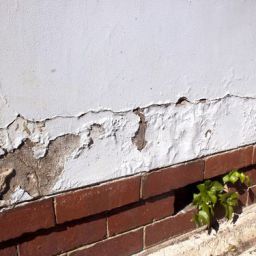

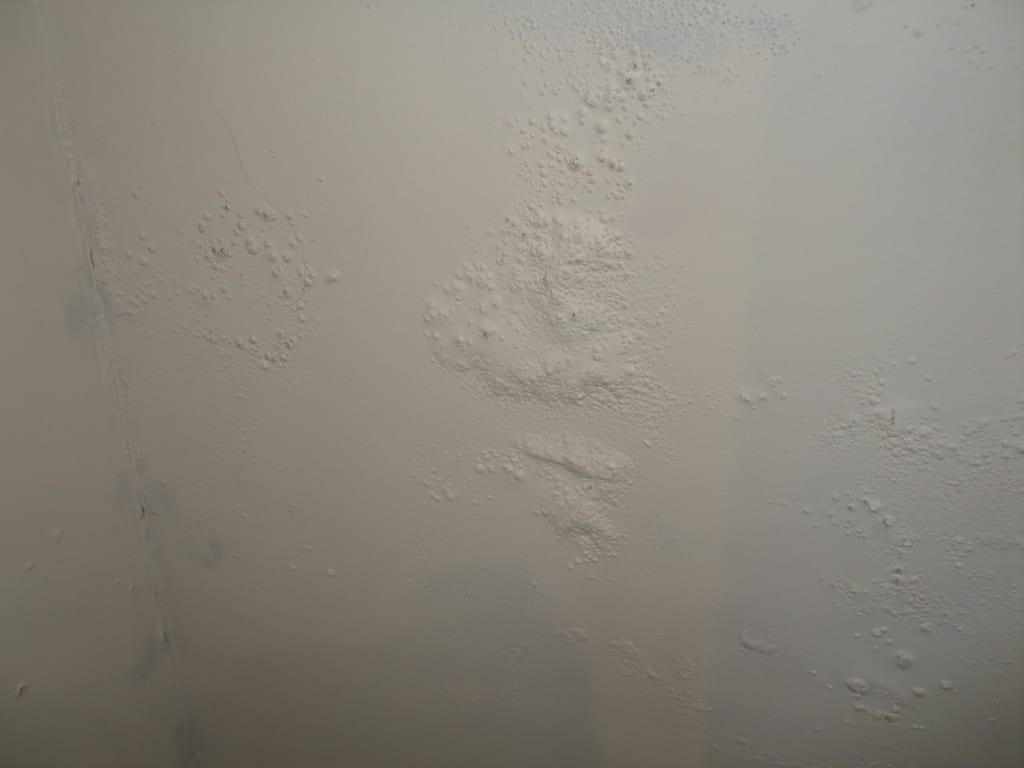
Bubbling paint as we call it, occurs when the top layers of paint loose adhesion to the previously painted surface or substrate. This process usually takes place well after the top coats have dried.
Dependent upon what paint was used, and whether it is flexible or not, will determine how quickly the bubbles will begin to flake and peel off. These issues are often overlooked and only noticed once the peeling or flaking process unfolds.
Bubbles are most commonly caused by heat, moisture or a combination of both.
Moisture
Bubbling caused as a result of moisture being trapped within the walls or other substrate, prior to application of primers or top coats.
This liquid then converts into a vapour when the surface is heated by the sun and expands, but cannot escape through the paint. Most commonly seen in the form of rising damp.

Solvents
Bubbling caused as a result of an oil or solvent based substance trapped between substrate/primer or previously painted surface, and the top coat.
Therefore not being able to evaporate or escape when the surface is heated. Most commonly seen in commercial workshops or warehousing.
Bubbling is often the worst on North facing exterior walls. This is as a result of this side of the house having the most sun and being exposed to higher heat. When the temperatures cool in the evening, it is often seen that the bubbles do shrink completely or decrease in size, and then reappear the next day.